A Double Burden to the Airways: How Viral Infections Affect Asthma
It often begins with a runny nose, followed by a sore throat and coughing. Respiratory infections and the body’s response to them can place a significant burden on anyone. But what happens when a person already has a pre-existing condition such as asthma? And how do viruses contribute to the development or worsening of asthma? On the occasion of World Asthma Day, we explore these questions and highlight the potential role of ETH47, a drug further developed by the NoVir consortium, in the prevention of asthma attacks.
Viruses can not only provoke acute attacks but also trigger the onset of asthma
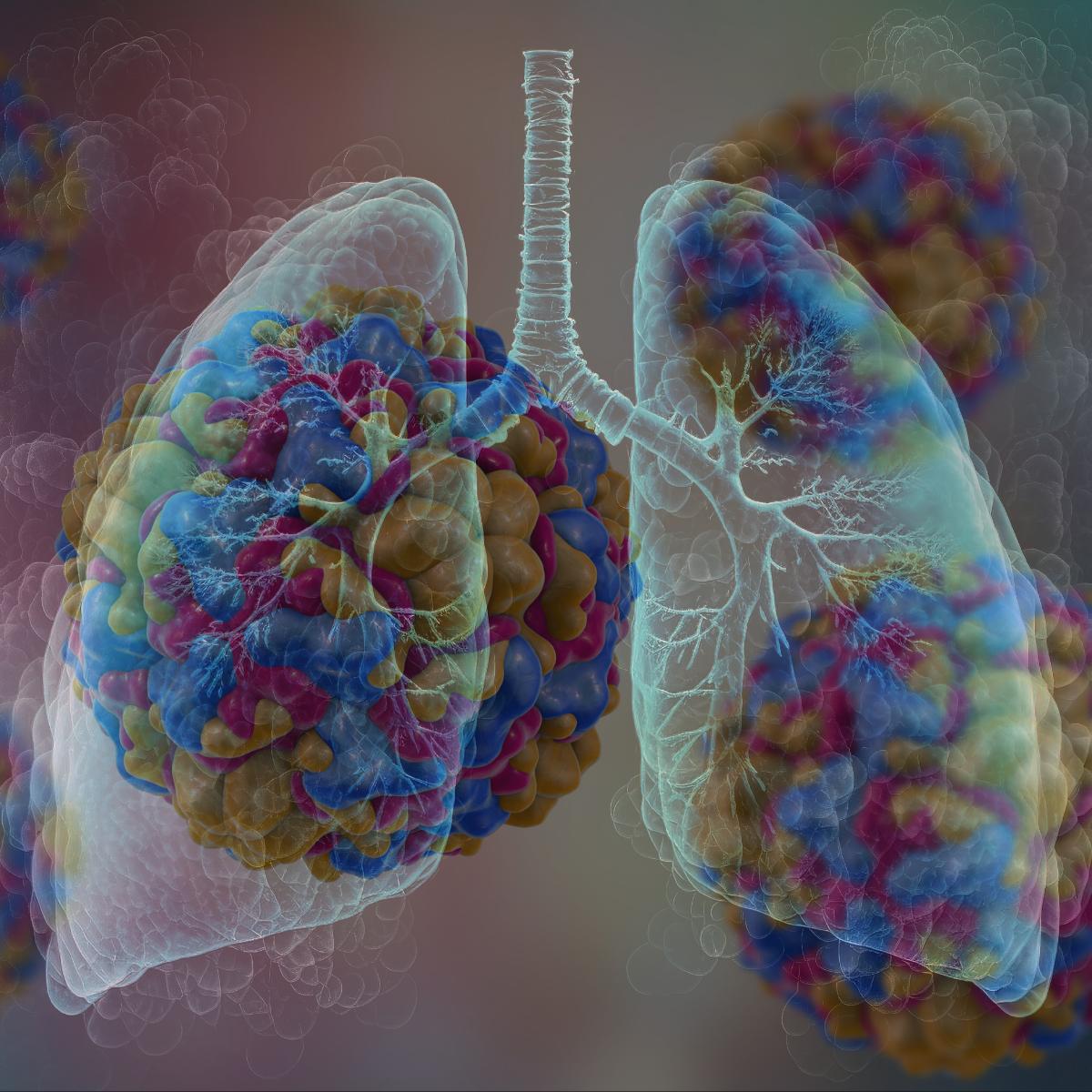
Figure 1: Illustration of a human lung and rhinoviruses
Two main types of asthma can be distinguished. On the one hand, there is allergic or extrinsic asthma, which - as the name suggests - is triggered by allergic reactions to external factors such as pollen exposure or mould. On the other hand, there is intrinsic asthma that typically develops in adulthood. This form is not caused by allergens but can arise as a result of viral infections. But it is also common to see mixed forms of asthma where both allergic and non-allergic factors contribute to airway inflammation.
Regardless of the type, people with asthma are generally more susceptible to respiratory viruses. This is not only true for serious infections such as influenza, but also for common cold viruses that in healthy people usually cause only mild symptoms like a runny or stuffy nose, sore throat, and a light headache. In people with asthma, even generally harmless viruses can trigger severe asthma flare ups, known as exacerbations. In asthmatics, viral infection increases airway inflammation and mucus production, leading to chest tightness, shortness of breath, and wheezing that may worsen quickly. In severe cases, these exacerbations often require urgent medical treatment and can sometimes lead to hospitalisation or intensive care, especially if breathing becomes critically difficult. In fact, about 80% of asthmatics that need emergency treatment due to an asthma attack have an acute respiratory virus infection (see Grissel et al 2005, Johnston et al. 1995). Studies particularly highlight rhinoviruses as common triggers of asthma attacks, but also show that infections with RSV, influenza virus, and coronavirus can be especially dangerous for people with asthma (see Bakakos et al. 2023, Busse et al. 2010).

ETH47 as preventative and therapeutic treatment for people with asthma
NoVir builds on this approach. The antiviral nasal spray ETH47 is designed to increase the production of interferon-lambda in asthmatics. In this way, it rebuilds the natural “antiviral firewall” and improves the immune response of this vulnerable group by targeting virus replication at its entry point into the human body, namely, the mucosal surfaces of the airways.
A Phase 2 clinical trial is currently underway to investigate the protective effect of ETH47 against rhinovirus infections in people with asthma. Future studies will also assess its potential benefit for other chronic inflammatory lung conditions, such as COPD. Preventing virus triggered flare-ups in these patients could significantly improve their quality of life and help preserve lung function over the long term. If successful, this approach could represent a paradigm shift in asthma therapy, offering people with chronic lung diseases the chance to live more freely, with fewer attacks and fewer hospital visits caused by common respiratory viruses.
References
Bakakos, Agamemnon; Zoi Sotiropoulou; Angelos Vontetsianos; Stavroula Zaneli; Andriana I Papaioannou; Petros Bakakos. 2023. Epidemiology and Immunopathogenesis of Virus Associated Asthma Exacerbations. Journal of Asthma and Allergy 16. 1025-1040.
Busse, William W; Robert F Lemanske Jr, James E Gern. 2010. Role of viral respiratory infections in asthma and asthma exacerbations. Lancet 367. 826-34.
Contoli, Marco; Simon D Message; Vasile Laza-Stanca; Michael R Edwards; Peter A B Wark; Nathan W Bartlett; Tatiana Kebadze; Patrick Mallia; Luminita A Stanciu; Hayley L Parker; Louise Slater; Anita Lewis-Antes; Onn M Kon; Stephen T Holgate; Donna E Davies; Sergei V Kotenko; Alberto Papi & Sebastian L Johnston. 2006. Role of deficient type III interferon-l production in asthma exacerbations. Nature Medicine 12. 1023-1024.
Grissell TV, Heather Powell, Darren R Shafren, Michael J Boyle, Michael J Hensley, Peter D Jones, Bruce F Whitehead, Peter G Gibson. 2005. Interleukin-10 gene expression in acute virus-induced asthma. Am J Respir Crit Care Med172(4).433-9.
Johnston SL, P K Pattemore, G Sanderson, et al.1995. Community study of role of viral infections in exacerbations of asthma in 9–11 year old children. BMJ. 310.1225–1229.