From Lab to Patient: Strengthening Pandemic Preparedness in NoVir
Together for health. Stand with science is the motto of this year’s World Health Day. At NoVir, we’re convinced that evidence-based science and medicine are key to a future-proof and sustainable European healthcare system. Therefore, our team of four European partners is committed to advancing antiviral drug development and to foster pandemic preparedness. By sharing our expertise across various fields, as well as our resources, we aim to better understand viral infections and how to protect societies from viral threats.
 Consortium photo from our first progress meeting in November 2025
ETHRIS – mRNA Pioneer and Clinical Trial Specialist
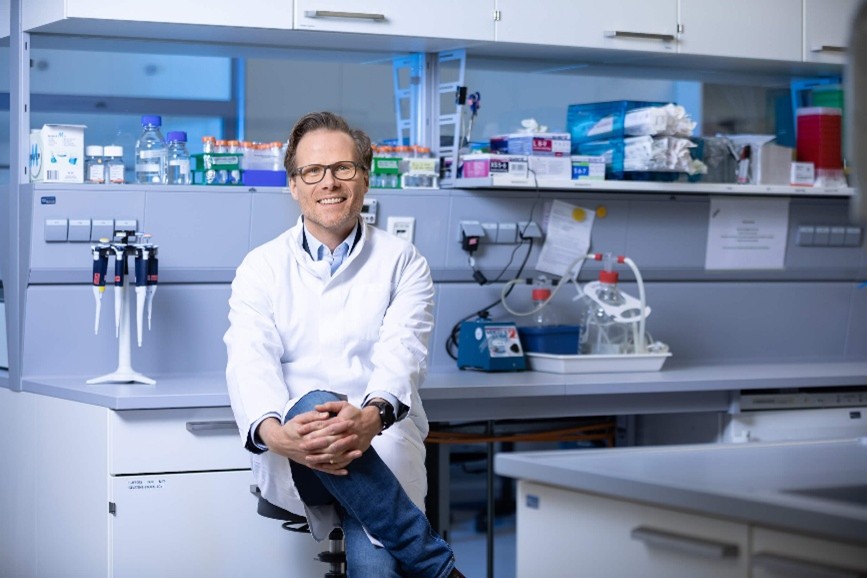
NoVir builds on prior drug development by our coordinating institution, Ethris. The mRNA pioneer developed ETH47, the antiviral compound at the core of the project. Founded in 2009, Ethris is committed to establishing mRNA as a new drug modality. The company focuses on developing therapies for respiratory and lung diseases, as well as next-generation mRNA vaccines. In addition to coordinating the project and overseeing risk management and ethical aspects of the studies, Ethris leads the clinical trials with both healthy adults and adults with asthma. These studies aim to demonstrate the efficacy of ETH47 against viral infection.
 ©Ethris
“ETH47 redefines how we think about antiviral protection: defense should begin where infection starts, directly at the virus entry portal. The NoVir project provides the framework to turn this concept into a robust platform for pandemic preparedness.” - Carsten Rudoph, Co-Founder of Ethris
This is achieved through a placebo-controlled study design. In this well-established approach, two groups of participants are compared. One group receives ETH47, while the other receives a substance without an active medical effect, a so-called placebo. Participants are randomly assigned to these groups, and neither they nor the researchers know who receives which treatment. During the study period, all participants are closely monitored and asked about their symptoms. After collecting and analysing the data, the team evaluates whether the group receiving ETH47 shows better outcomes compared to the placebo group. If so, this would provide evidence of the efficacy of ETH47, bringing it one step closer to market readiness.
Technical University of Munich – Experts in Virus-Host Interactions
A complementary pre-clinical approach is taken by our virology team at the Technical University of Munich (TUM). The institute of virology at TUM bridges fundamental research with applied questions in the field of human pathogenic viruses. Their work focuses on advancing the understanding of virus–host interactions, particularly on how these interactions shape and influence the immune response. To achieve this, the team combines molecular analyses with in vitro cell culture systems and in vivo models.

“For our lab team at TUM, Ethris is an essential collaboration partner in translating our knowledge in basic science into impactful therapies.” – Andreas Pichlmair, Professor for Immunopathology at Technical University of Munich
A central objective of the Munich team is to identify the key proteins and pathways involved in the host’s antiviral defence. Within the NoVir project, special emphasis is placed on interferon lambda (IFN-λ), a crucial messenger protein of antiviral defence. The production of this protein is stimulated by ETH47, the key compound under investigation. Through a series of laboratory experiments, the team aims to determine whether the antiviral effects of ETH47 extend beyond the respiratory tract. To this end, they study virus families that do not typically infect or replicate in respiratory tissues.
For efficient analysis, the researchers employ established screening approaches using fluorophore-labelled reporter viruses. These engineered viruses emit detectable signals upon infection, enabling real-time visualisation and precise tracking of viral replication.
Further investigations involve primary cell models and preclinical models to further explore the breadth and efficacy of ETH47’s antiviral activity. Primary cell models consist of cell cultures derived directly from living organisms and retain key physiological characteristics of their tissue of origin. In the context of NoVir, primary cells from respiratory, epithelial, and liver tissues are used to monitor viral growth and host immune responses under biologically relevant conditions. This work contributes to a deeper understanding of ETH47’s antiviral activity on a molecular level.
Aarhus University – Advancing Research on Innate Immune Defence
Our NoVir partners at the Center for Immunology of Viral Infections at Aarhus University specialise in understanding how the immune system detects viral infections and responds to their effects on the organism. The team aims to uncover novel strategies to strengthen antiviral defence mechanisms. To this end, they shed light on restriction factors that control viral replication and investigate how to maintain a balance between effective antiviral defence and the protection and preservation of affected tissues.
Within NoVir, the Danish team contributes to a better understanding of the relationship between viral infection routes and drug delivery strategies tailored to these pathways. To evaluate the efficacy of ETH47 under physiological conditions, the Aarhus team employs mouse models. The goal is to determine the most effective dosage of ETH47 for both prophylactic (pre-treatment) and therapeutic (post-treatment) applications.
In close collaboration with our partners from TUM, both labs investigate the replication of different viruses in various organs, with and without the administration of ETH47. While the team in Munich focuses on viruses causing hemorrhagic fevers, the Aarhus lab concentrates on herpesviruses that can be transmitted through close contact.
EURICE – Providing Research and Innovation Services
As a consultancy partner, EURICE supports the NoVir researchers in project coordination, innovation management, and outreach activities. Founded in 2000, the company has extensive experience in European collaborative research projects. Over the years, EURICE has developed particular expertise in the health ecosystem, which represents one of the key thematic areas of its portfolio. Through its broad network of relevant stakeholders, combined with strong capabilities in project management and science communication, EURICE contributes to the successful implementation of the project.
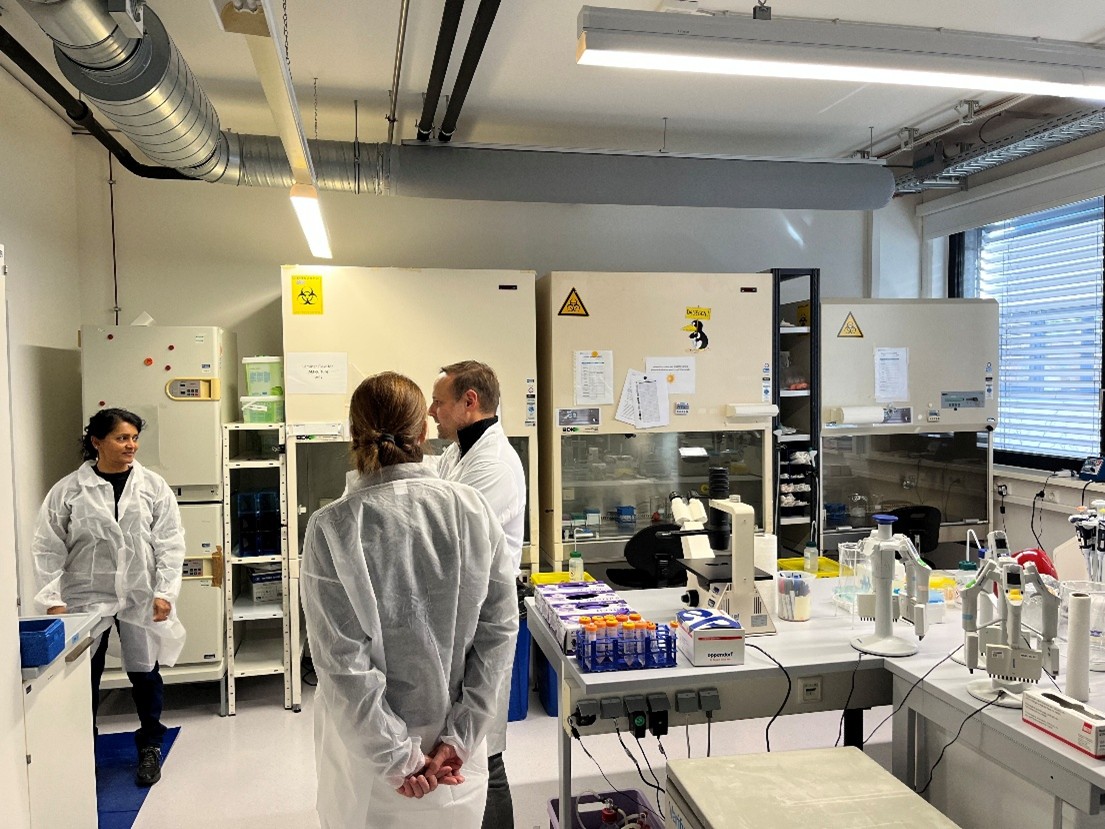 The NoVir team is visiting the lab of our coordinating partner, Ethris
Together, all NoVir partners combine complementary expertise ranging from fundamental research to clinical application and project management. By joining forces, we aim to strengthen Europe’s preparedness for future pandemic threats and advance the development of innovative antiviral therapeutics.